methods of manufacturing industrial components
Manufacturing methods of industrial parts can be significantly different. Because each process has its own strengths, compatible materials and processes. A deep understanding and better understanding of the range of production methods will improve this decision making process. Manufacturing metal parts or manufacturing industrial parts includes processes such as cutting, shaping, welding. These processes transform raw materials into final parts and structures. Choosing the right process or methods for manufacturing industrial parts will depend on various things, such as the material of the part, parameters affecting the final product, such as tolerances and possible assembly sensitivities.
most important method of manufacturing industrial parts
- ماشین کاری CNC (فرز CNC و تراشکاری CNC)
- اکستروژن
- ریخته گری فلزات
- دایکستینگ یا ریخته گری دایکاست
- قالب گیری تزریق فلز
- آهنگری
- شکل دهی ورق و پرسکار
- پرینت سه بعدی فلزی
1- CNC Machine
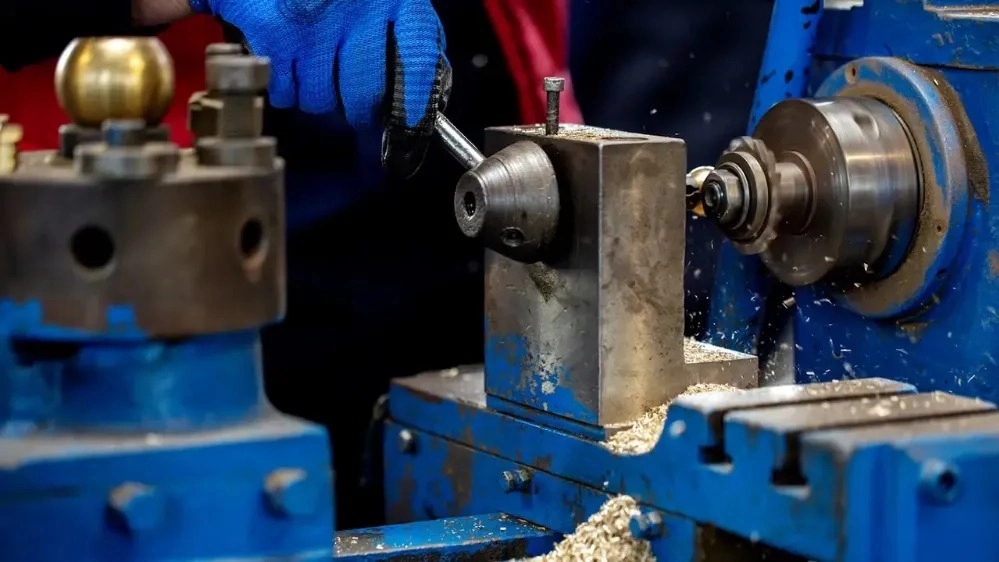
CNC machining method (CNC milling and CNC turning) is widely used in the manufacturing and production of industrial parts due to its low cost, high dimensional accuracy and good repeatability, and the word CNC or the same (Computer Numerical Control-CNC) means control It is a computer number.
Designers of industrial parts use CNC machining to remove and separate a layer of the workpiece and design complex parts using software such as Solidworks and CATIA. The use of interface software extracts the designed part machining program and by sending it to the CNC machine, they perform the machining process. CNC machining is a subtractive process that involves creating custom-shaped designs from a workpiece through computer controls. This process is so-called "reductive" in that the product is produced by crushing the material from the initial piece instead of adding materials to produce the product.
1- Extrusion
Another method of manufacturing metallic or non-metallic industrial parts is extrusion. Extrusion involves pressing hot metal or plastic through a die. Like squeezing a tube of toothpaste. Extrusion of metal parts usually requires post-finishing, such as cutting, drilling or machining, but is ideal for high-volume parts that require a constant cross-sectional area. This is because extrusion profiles can have almost any shape with a continuous cross-section. A great example is the door and window profile, with several features to secure different frames in the set. These frames can even be hollow, such as square, round or hexagonal tubes. Manufacturers determine the structure of the mold when creating the shape.
method of making extrusion
Three types of extrusion are hot extrusion, cold extrusion and friction. Hot extrusion involves high temperatures used to prevent hardening of the material. Cold extrusion involves close to room temperature, which has advantages over hot extrusion; This material may be stronger, less oxidized, or less resistant. Finally, friction extrusion involves the use of force to press the charge into the die.
3- Metal casting
Metal casting is a long-term production process of manufacturing industrial parts. It involves pouring liquid metal into a mold. In this method, the liquid metal is hardened to the desired shape, then it is cooled and removed from the mold. Metal casting is a modern and automatic method and uses advanced tools. But its principles are fixed and its widespread use is a proof of the success of this method.
Casting and Industrial Uses
Almost every commercially mass-produced mechanical device today uses some form of casting. In mass production, casting usually outperforms CNC machining in terms of cost and throughput. Metal casting can achieve high tolerance structural components for a variety of applications. Washing machines, cars and metal pipes all use metal castings.
4- Dycrost or Dycrosis
Casting is the best option for producing and manufacturing a large volume of industrial parts. In the case of traditional or sand casting, it is the force of the weight of the molten materials that pours them into the chamber. Molten materials being under pressure in all stages of casting, including solidification, increases their strength and diameter. In addition to the fact that there is no more efficient solution than diecast for the production of metals, the shortest way to produce a metal product is the same diecast casting method.
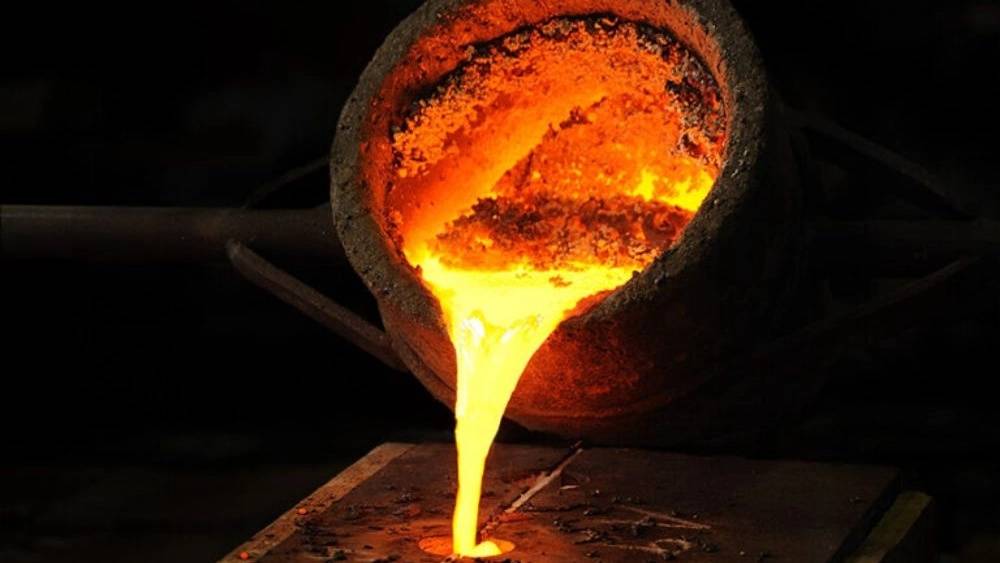
The generality of this method is very similar to traditional methods and the only difference with traditional methods is that the melt is under pressure. Casting uses steel molds and low melting point metals as materials. Engineers use castings for complex projects where precision, reliability and surface manufacturability are critical. Casting uses reusable hard tools similar to the injection molding process, which gives the parts a smoother surface while keeping the cost low in mass quantities.
5- Metal Injection Molding
Injection molding is the most common method for manufacturing plastic industrial parts. But manufacturers also use this method to produce metal parts. Cost-effective for large projects, even with high precision. Although this method is suitable for projects that require small parts, metal injection molding, or MIM, can be used for parts of any size.
6- Forging
Like metal casting, blacksmithing has been used for centuries. This process of manufacturing industrial parts is heating and shaping metal parts by force, with this interpretation you will probably think of the familiar image of the blacksmith and the anvil as he works hard and exerts his force. Today, forging is widely used in automated industrial processes.
7- Sheet forming and pressing for industrial parts
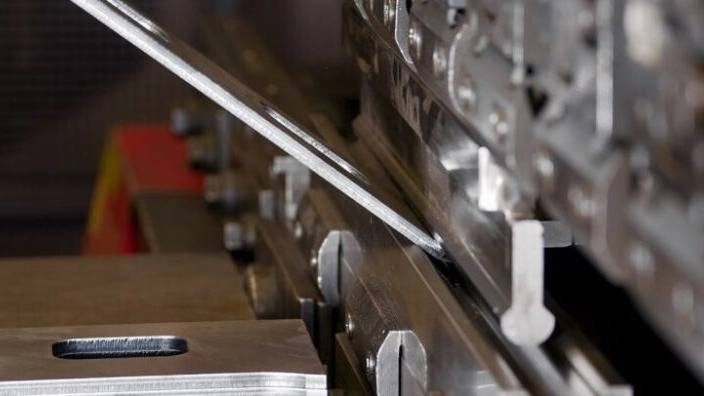
Metal sheet manufacturing includes cutting parts from metal sheets. The blank sheets may then be processed through die brakes and presses to create bends and angular forms and create a three-dimensional structure. Sheet metal services have stamping to produce these parts at high speed. In fact, stamping is faster than any other metalworking process.
8- 3D Printing and Industrial Parts Manufacturing
Metal 3D printing service uses precise lasers to manufacture industrial parts. It is ideal for testing and low-volume, high-value parts, but is not as scalable as many other metallurgical processes. This is why it is often used for prototypes as well as alternatives to low-volume castings
3D Printing Method
Now let's talk about how it works: the manufacturing chamber is first filled with an inert gas (eg argon) to minimize the oxidation of the metal powder and then heated to the desired manufacturing temperature. A thin layer of metal powder is spread on the build platform and a high-powered laser scans its cross-section, fusing the metal particles together and creating the next layer. When the scanning process is complete, the build platform is one layer thick. It moves downwards and the stirrer spreads another thin layer of metal powder. This process is repeated until the entire part is completed. After the manufacturing process is completed, the parts are completely encased in metal powder. As the chamber cools, the excess powder is manually removed and the components are typically heat-treated while still attached to the build platform to release any residual stresses. The parts are then removed from the build plate via cutting, machining, or wire EDM. Then they are ready for use or further processing afterwards.